Category: 3D Printing Know-how & Tips
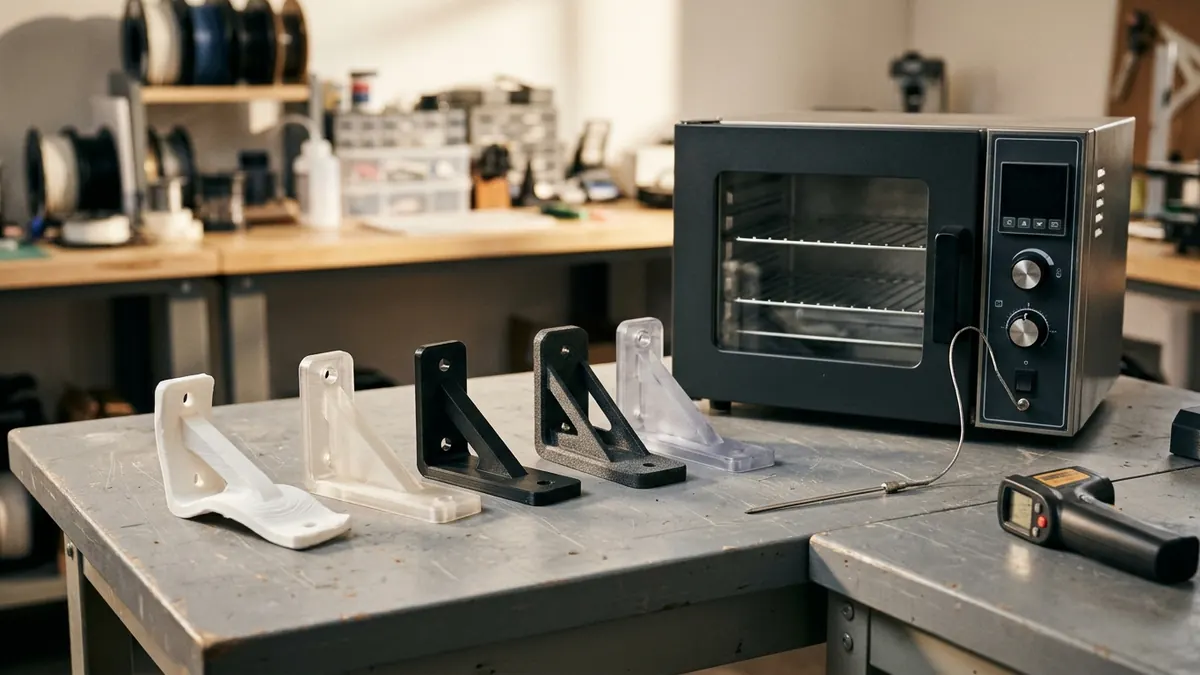
A car mount that hangs warped from the dashboard after the first sunny day, or a housing next to a power supply that slowly gives way: heat load is often underestimated in 3D printing. Anyone looking for heat-resistant filament will find lots of figures in data sheets – glass transition temperature, HDT, Vicat – that…

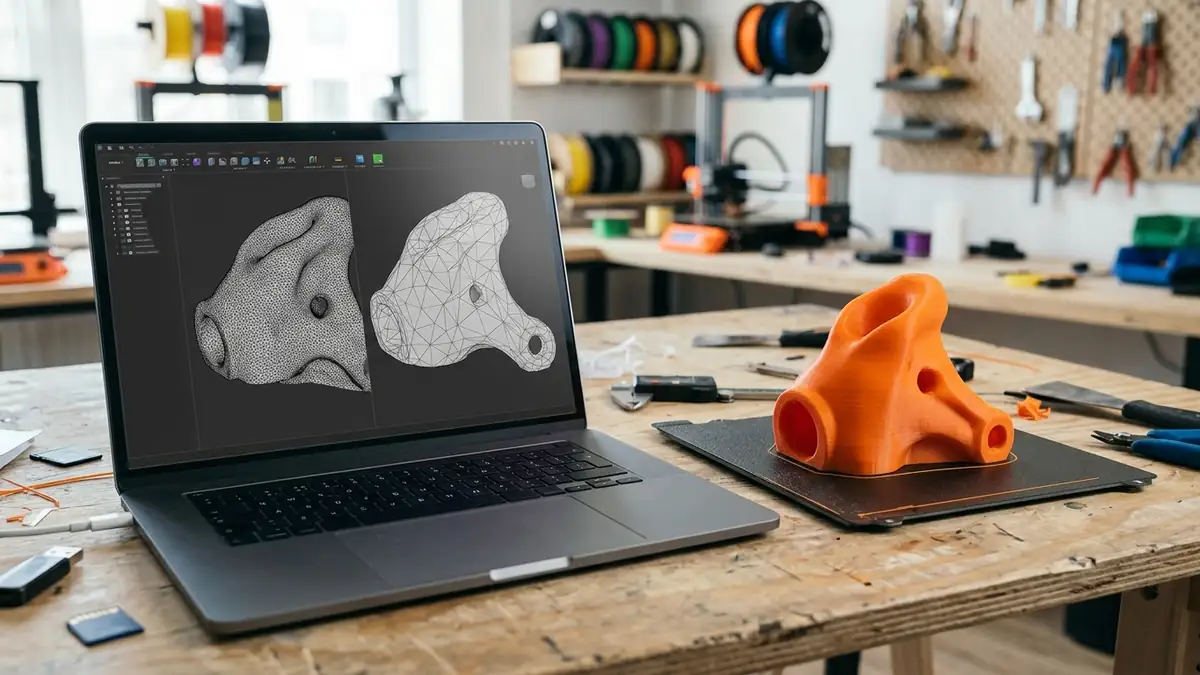
We increasingly receive print jobs with STL files of 40, 80 or even 200 MB. Most of them come from 3D scans, sculpting programs or a CAD export at maximum resolution. This amount of data is almost never needed for printing: an FDM nozzle of 0.4 mm simply cannot reproduce details in the hundredth-of-a-millimetre range.…
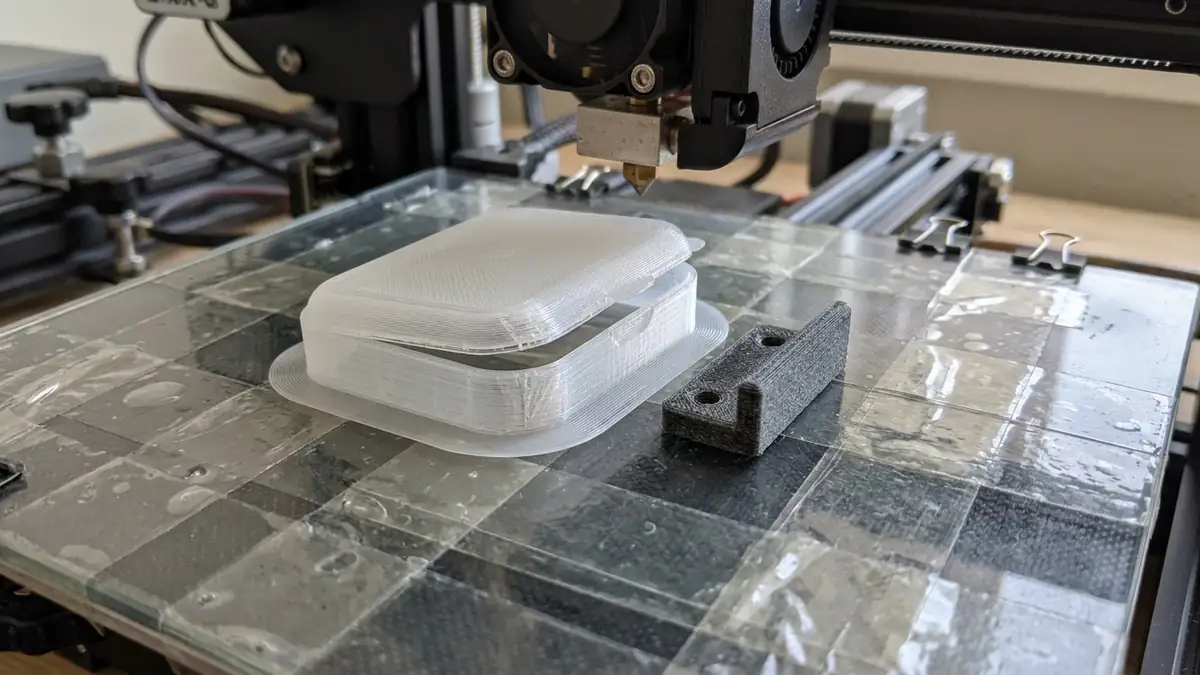
Polypropylene is found in caps with living hinges, laboratory containers, car interior trim and battery boxes. The plastic is lightweight, tough, extremely chemical-resistant and absorbs virtually no water – properties that also make it attractive for FDM printing. At the same time, PP is considered one of the most stubborn filaments: it adheres to almost…
Multicolour and multi-material 3D printing (using automatic material-changing systems such as AMS, MMU or true IDEX/dual extrusion) opens up entirely new design freedoms: from multicolour lettering and seals through to highly complex undercuts with water-soluble support structures (PVA, BVOH or HIPS). In day-to-day production, however, the biggest challenge is the material lost to the so-called…

Sagging bridges, wavy undersides and edges curling up on steep slopes are among the most common defects in FDM 3D printing. As soon as molten filament is laid down without a supporting layer beneath it, part cooling, Bridge Flow, bridge and overhang speed, layer height and design determine the result. In this guide, 3D Bäckerei…
The faster a 3D printer accelerates and brakes, the more strongly changes of direction excite the mechanics into vibration. This shows up as waves and shadows behind corners, holes and lettering – known as ghosting, ringing or rippling. Input shaping, also called resonance compensation, reshapes the firmware’s motion commands so that these natural oscillations largely…
Pressure Advance (Klipper) or Linear Advance (Marlin) compensates for the pressure build-up in the nozzle, giving you sharp corners without bulges and even walls. Otherwise, when the print head decelerates before a change of direction, molten filament oozes out uncontrollably – resulting in bulging, rounded corners and dimensional deviations, followed by brief under-extrusion as the…
In FDM and FFF 3D printing, the infill pattern largely determines mechanical load capacity, part weight and print time. While conventional grid patterns are prone to the dreaded nozzle scraping under shear forces and fast print head movements, modern 3D geometries such as Gyroid and Adaptive Cubic offer almost isotropic strength in all three spatial…
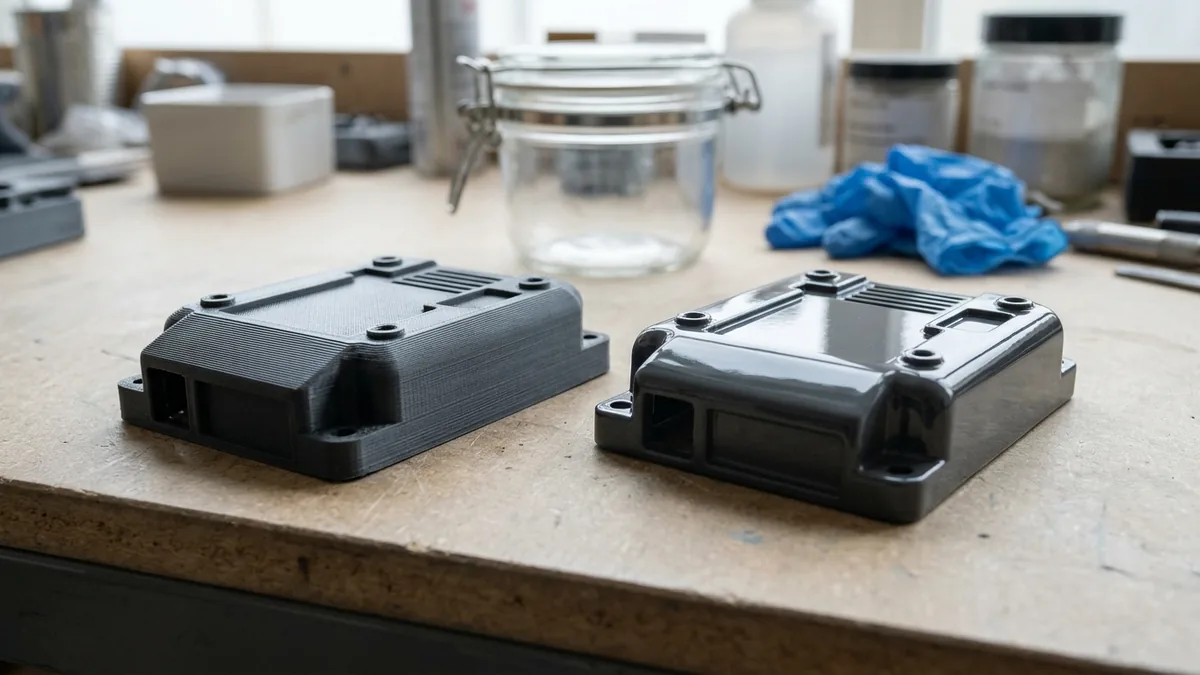
ASA vapour smoothing is the quickest way to turn a ridged, matte FDM surface into a glossy part that looks almost injection-moulded: solvent vapour softens the outermost skin of the plastic in a controlled way, the layer lines flow together and the surface closes up. If you want to smooth ASA or chemically smooth ABS,…
Contents: 1. PLA vs. PETG: The two most popular FDM polymers compared head to head 2. The phenomenon of creep: why PLA fails under sustained load 3. Glass transition temperature (Tg), UV & chemical resistance 4. Z-axis layer adhesion & impact resistance 5. Detailed properties table: PLA vs. Tough PLA vs. PETG vs. PETG-CF 6.…